

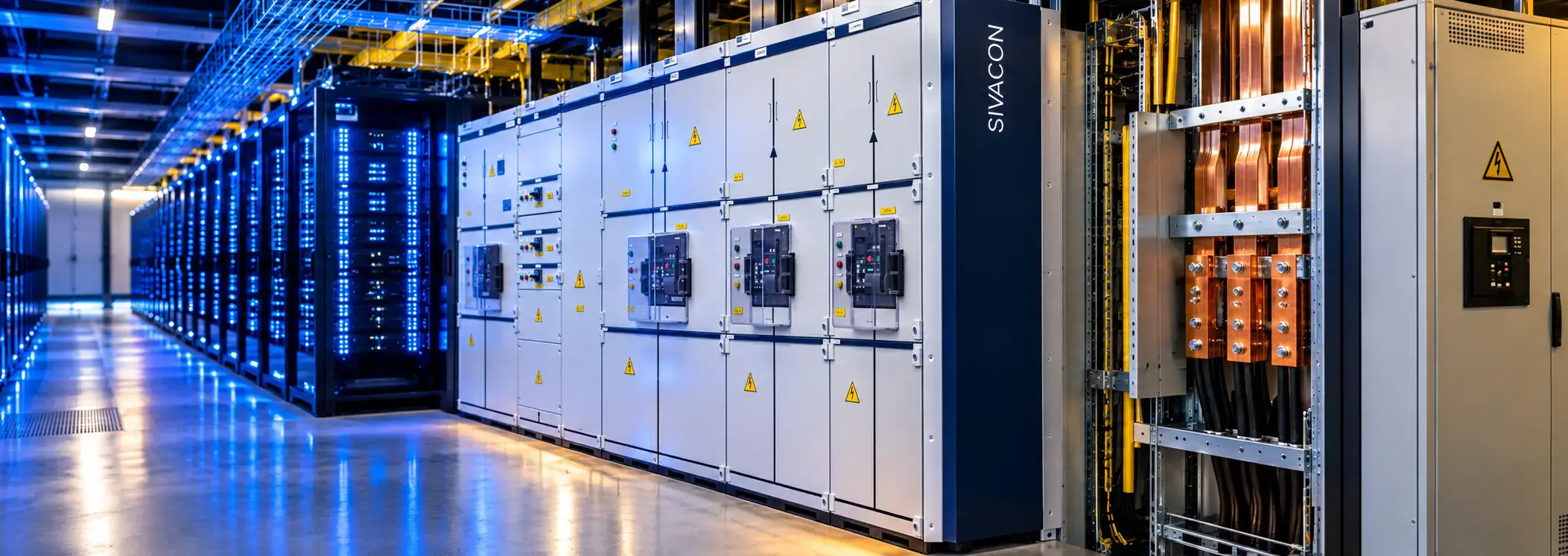
Colombia has become one of Latin America's four most attractive markets for data centers, with projected investment of more than US$1.16 billion by 2030. The wave is driven by artificial intelligence, which demands ever more compute capacity and, therefore, more electricity. But there is one test that will decide who wins this race, and it is not the software: it is the electrical infrastructure.
Bogota shows a construction cost of roughly US$7.49 per installed watt, below other cities in the region, which makes it competitive against Brazil, Mexico and Chile. In recent months, operators such as Equinix, Oracle, Claro, HostDime and Liberty Networks announced digital infrastructure projects or investments in the country. The conversation is no longer only about "hosting": it is about cloud, data sovereignty, cybersecurity and AI.
The critical challenge is not server demand, but the demand for power. Data centers already account for close to 1.5% of global electricity consumption, and AI is sending that curve sharply higher. There is a second front: global spending on data centers is straining the supply chain, and Colombia is already bracing for a shortage of equipment for the electrical sector (transformers, switchgear, distribution boards) with lead times that keep getting longer. Without available, reliable electrical infrastructure, the investment never lands.
A lesson in specification. In a data center, power is specified by its availability, not by its capacity alone. Define redundancy (N+1 as a minimum), continuity (automatic transfer and backup) and power quality from the design stage, and secure equipment manufacturing early, because today the lead time is as critical as the price.
For a sector that needs total availability and short lead times, local manufacturing is a strategic advantage against the global equipment shortage. Industrias Ectricol S.A.S. manufactures in Funza the high-current Sivacon S8 switchboard, medium voltage switchgear, automatic transfer switch panels and prefabricated electrical rooms (shelters), with routine testing (FAT) before dispatch. Close to the project and backed by Siemens.
This challenge connects Utilities, telecommunications and critical infrastructure. A data center is, at heart, a mission-critical electrical operation: its business depends on power never failing.
In Colombia, every installation must comply with RETIE; and in terms of availability, data centers are designed to standards such as those of the Uptime Institute (Tier levels). The investment landscape and the energy challenge are covered by Portafolio and by Data Center Dynamics.
Because AI drives up compute demand and, with it, electricity demand. Data centers already consume close to 1.5% of the world's electricity, and Colombia is bracing for a shortage of electrical equipment and long lead times, which can slow investment if the infrastructure is not available.
Reliable medium voltage for the incoming supply, high-current low voltage distribution, automatic transfer, backup and redundant architectures (N+1), plus power quality and suitable electrical rooms, all under RETIE.
It is an architecture in which, on top of the equipment needed to operate (N), an additional backup unit (+1) is installed. That way, if a component fails or goes into maintenance, the system keeps running without interrupting service.
Because in the face of a global shortage of electrical equipment and long lead times, manufacturing close to the project (as Ectricol does in Funza) shortens timelines, makes support easier and reduces the risk that missing infrastructure will delay commissioning.
Has your data center already solved its electrical infrastructure?
The engineering team at Industrias Ectricol S.A.S. designs and manufactures locally the medium and low voltage distribution, the transfer systems and the electrical rooms for critical infrastructure.
Talk to a specialist See the Sivacon S8 switchboard
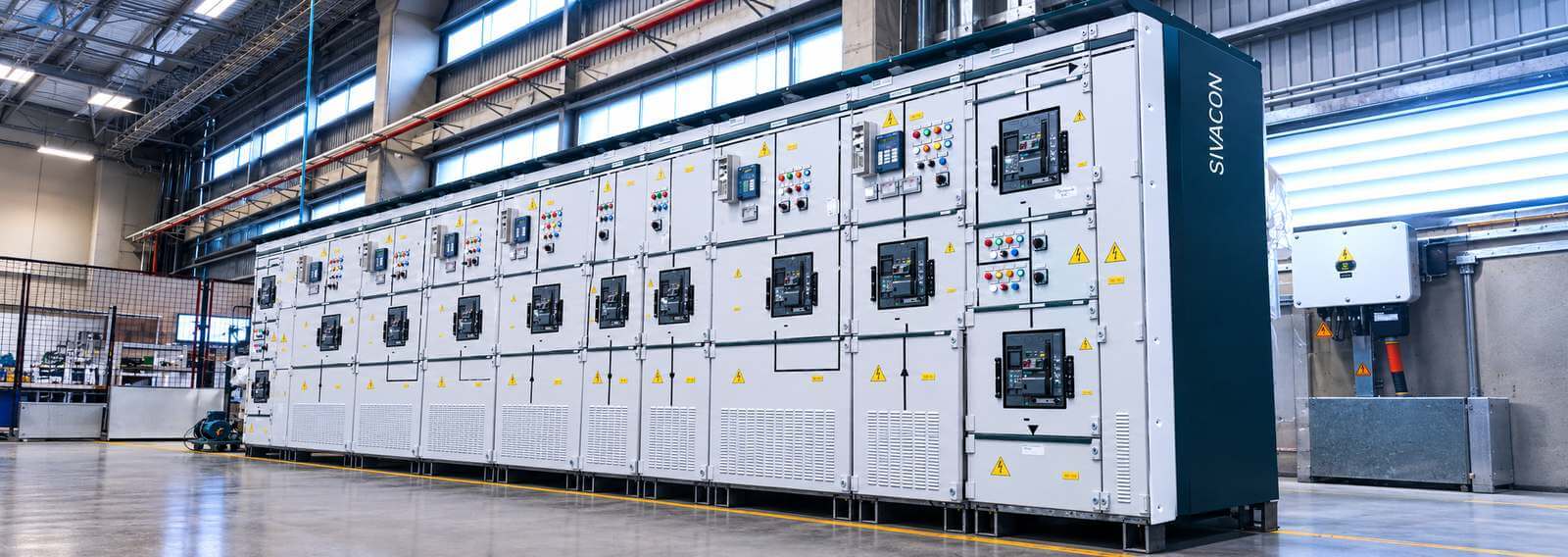
Two low-voltage switchboards can look identical from the outside and yet protect your personnel in radically different ways. The difference lies in one line of the specification that almost nobody...
Keep reading